

Tracking data center assets with spreadsheets may work on a small scale, but it quickly becomes a liability as environments grow. Spreadsheets weren’t built for the complexity of modern data centers. In this article, we’ll explore where they fall short and how streamlined workflows give data center managers the visibility and control they need.
The Growing Problem with Spreadsheets
Tracking assets in a data center can be a tedious, error-prone process when managed in spreadsheets. This can feel manageable, especially for teams proficient in Excel, but as data center environments evolve, spreadsheets can quickly become a liability:
- Multiple editors introduce errors
- There’s no reliable way to see who made changes, when they happened, or why
- Hours of work can be accidentally overwritten
- Static documents are outdated almost as soon as they’re saved
- Thousands of rows across multiple sites become unmanageable
- Rack elevations, RU positions, and space availability can’t be reliably visualized
- Generating reports for management requires hours of manual work
- No granular permissions to separate read-only from editing roles
Even the most detailed spreadsheets complete with rack elevations and space calculations, require updates often by multiple users, with no reliable way to track what changed or who made the edits.
With the rise of colocation facilities, multiple teams often rely on the same data, sometimes across different tools. This creates significant visibility gaps and makes it difficult to maintain consistent, accurate records.
A Smarter Way to Manage the Physical Layer
At Align, we’ve seen firsthand how these challenges unfold. Even organizations that invest in intelligent platforms often have discrepancies when it comes to the physical layer. To address these challenges, we developed Asset Point, our proprietary DCIM tool and data repository as a modern alternative to spreadsheets:
- Error-Free Collaboration: Centralizes updates in one platform, eliminating conflicting edits and reducing mistakes.
- Detailed Audit Trails: Every update is logged with timestamps and usernames, so you always know who changed what and when.
- Data Integrity Safeguards: Structured fields and built-in protections prevent accidental overwrites and preserve accuracy.
- Accurate Data: Syncs with physical scans using Asset Scan and integrates with other tools, ensuring records stay continuously up to date.
- Search & Filtering: Powerful filters and site-level views make it easy to manage thousands of assets across multiple locations.
- Intuitive Visualizations: Provides interactive cabinet elevations, RU positions, and floorplans with capacity data.
- Reporting: Generates comprehensive and executive level summaries.
- Role-Based Access: Granular permissions ensure the right people can view or edit data, while protecting critical records.
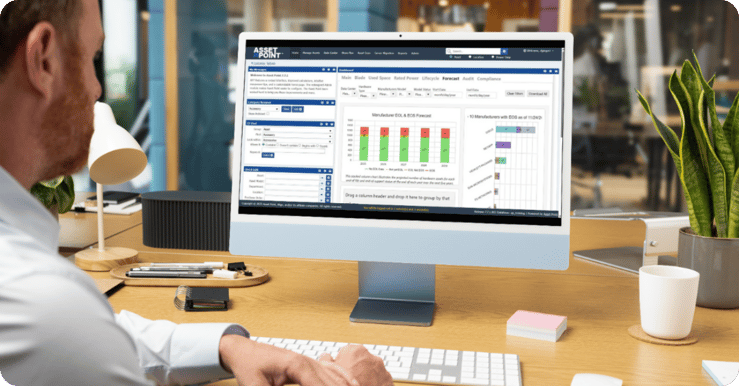
Instead of scrolling through rows and columns, teams can visualize hardware placement, plan consolidations or relocations, and manage move/add/change without guesswork.
What Organizations Gain by Modernizing
- Confidence in Accuracy: With real-time updates and validation, teams can trust their inventory data.
- Time Savings: Automated reporting, searches, and workflows eliminate hours of manual spreadsheet work.
- Improved Compliance: Detailed audit trails and clear documentation make audits smooth and stress-free.
- Operational Efficiency: Visual rack elevations and floorplans simplify planning for installs, moves, and decommissions.
- Scalability: Whether managing hundreds or thousands of assets across multiple sites, data remains organized and accessible.
- Collaboration & Clarity: Role-based access and visual workflows keep IT, facilities, and contractors aligned.
- Future-Readiness: Integrations with CMDBs and monitoring platforms strengthen the tools organizations already rely on.
Insights from the Field
- Don’t underestimate the importance of the physical layer, it’s the foundation for accurate inventory and planning.
- Even with advanced platforms, data drift happens without regular verification.
- Relying on spreadsheets creates invisible risks that only show up during audits, outages, or migrations.
- Transitioning to visualization tools doesn’t have to be disruptive, importing familiar formats makes it easier to adopt.
- Smarter tools deliver rapid value, reducing manual maintenance and ensuring leadership can rely on accurate information.
Ready to Rethink Your Approach?
If your team spends more time maintaining spreadsheets than managing infrastructure, it may be time to modernize. With Asset Point, you gain clarity, speed, and confidence in your environment.
Reach out to the Align team for a demo on how Asset Point can help your organization move away from spreadsheets.